Baumgartner, p.1
Baumgartner, page 1


Also by Paul Auster
The Invention of Solitude
The New York Trilogy
In the Country of Last Things
Moon Palace
The Music of Chance
Leviathan
Mr. Vertigo
Smoke & Blue in the Face
Hand to Mouth
Lulu on the Bridge
Timbuktu
The Book of Illusions
The Red Notebook
Oracle Night
The Brooklyn Follies
Travels in the Scriptorium
The Inner Life of Martin Frost
Man in the Dark
Invisible
Sunset Park
Winter Journal
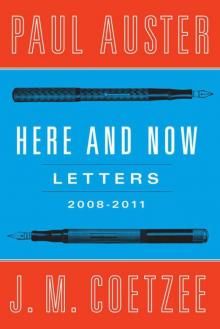
Here and Now
(with J. M. Coetzee)
Report from the Interior
A Life in Words
(with I. B. Siegumfeldt)
4 3 2 1
Talking to Strangers
White Spaces
Groundwork
Burning Boy
Bloodbath Nation
(with photographs by Spencer Ostrander)
PAUL AUSTER
BAUMGARTNER
a novel
Grove Press
New York
Copyright © 2023 by Paul Auster
Jacket design by Patricia Fabricant
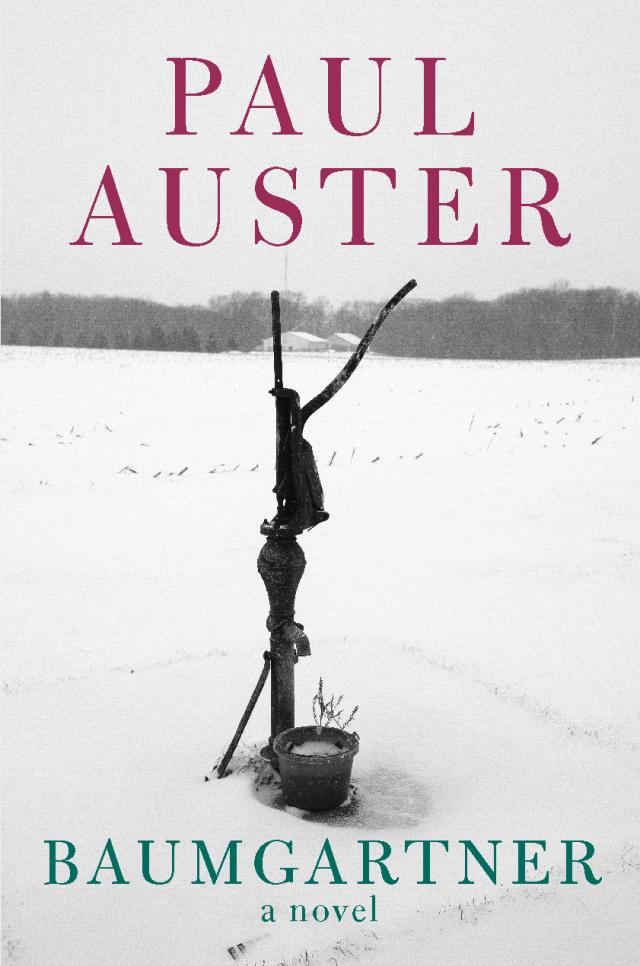
Jacket images: The Hustvedt Farm, Cannon Falls, Minnesota, photographed by Spencer Ostrander
Portions of this book were first published in Harper’s and Literary Hub.
All rights reserved. No part of this book may be reproduced in any form or by any electronic or mechanical means, including information storage and retrieval systems, without permission in writing from the publisher, except by a reviewer, who may quote brief passages in a review. Scanning, uploading, and electronic distribution of this book or the facilitation of such without the permission of the publisher is prohibited. Please purchase only authorized electronic editions, and do not participate in or encourage electronic piracy of copyrighted materials. Your support of the author’s rights is appreciated. Any member of educational institutions wishing to photocopy part or all of the work for classroom use, or anthology, should send inquiries to Grove Atlantic, 154 West 14th Street, New York, NY 10011 or permissions@groveatlantic.com.
FIRST EDITION
Published simultaneously in Canada
The interior of this book was designed by Norman E. Tuttle at Alpha Design & Composition.
This book was set in 11.5-pt. Adobe Caslon by Alpha Design & Composition of Pittsfield, NH.
First Grove Atlantic edition: November 2023
Library of Congress Cataloging-in-Publication data is available for this title.
ISBN 978-0-8021-6144-4
eISBN 978-0-8021-6153-6
Grove Press
an imprint of Grove Atlantic
154 West 14th Street
New York, NY 10011
Distributed by Publishers Group West
groveatlantic.com
Contents
Chapter 1
Chapter 2
Chapter 3
Chapter 4
Chapter 5
1
Baumgartner is sitting at his desk in the second-floor room he variously refers to as his study, his cogitorium, and his hole. Pen in hand, he is midway through a sentence in the third chapter of his monograph on Kierkegaard’s pseudonyms when it occurs to him that the book he needs to quote from in order to finish the sentence is downstairs in the living room, where he left it before going up to bed last night. On the way downstairs to retrieve the book, it also occurs to him that he promised to call his sister this morning at ten o’clock, and since it is almost ten now, he decides that he will go into the kitchen and make the call before retrieving the book from the living room. When he walks into the kitchen, however, he is stopped in his tracks by a sharp, stinging smell. Something is burning, he realizes, and as he advances toward the stove, he sees that one of the front burners has been left on and that a low, persistent flame is eating its way into the bottom of the small aluminum pot he used three hours ago to cook his breakfast of two soft-boiled eggs. He turns off the burner, and then, without thinking twice, that is, without bothering to fetch a pot holder or a towel, he lifts the destroyed, smoldering egg boiler off the stove and scalds his hand. Baumgartner cries out in pain. A fraction of a second later, he drops the pot, which hits the floor with an abrupt, clattering ping, and then, still yelping in pain, he rushes over to the sink, turns on the cold water, sticks his right hand under the spout, and holds it there for the next three or four minutes as the chilly stream pours down over his skin.
Hoping he has warded off any potential blisters on his fingers and palm, Baumgartner cautiously dries off his hand with a dish towel, pauses for a moment to flex his fingers, pats his hand with the towel a couple of more times, and then asks himself what he is doing in the kitchen. Before he can remember that he is supposed to be calling his sister, the telephone rings. He lifts the receiver off the hook and mumbles forth a guarded hello. His sister, he says to himself, finally remembering why he is here, and now that it is past ten and he has failed to call her, he fully expects Naomi to be the person on the other end of the line, his cantankerous younger sister who will no doubt begin the conversation by scolding him for having forgotten to call her again, as he always does, but once the person on the other end begins to speak, it turns out not to be Naomi but a man, an unknown man with an unfamiliar voice who is stammering out some sort of apology to him for being late. Late for what? Baumgartner asks. To read your meter, the man says. I was supposed to be there at nine, remember? No, Baumgartner doesn’t remember, he can’t recall a single moment in the past days or weeks when he thought the meter reader from the electric company was scheduled to be there at nine, and therefore he tells the man not to worry about it, he plans to be home all morning and afternoon, but the electric company man, who sounds young and inexperienced and eager to please, insists on explaining that he has no time to explain just now why he didn’t show up on time, but there was a good reason for it, a reason beyond his control, and that he will be there as soon as he can. Fine, Baumgartner says, I’ll see you then. He hangs up and looks down at his right hand, which has begun to throb from the burn, but when he examines his palm and fingers, he sees no signs of blistering or peeling skin, just a general sort of redness. Not so bad, he thinks, I can live with that, and then, addressing himself in the second person, he thinks, You stupid ass, consider yourself lucky.
It occurs to him that he should call Naomi now, on the spot, to head her off at the pass, but just as he lifts the receiver off the hook to dial her number, the doorbell rings. A prolonged sigh emerges from Baumgartner’s lungs. With the dial tone still buzzing in his hand, he hangs up the receiver and begins walking toward the front of the house, grumpily kicking aside the scorched pot as he heads out of the kitchen.
His mood brightens when he opens the door and sees that it is the UPS woman, Molly, a frequent visitor who over time has acquired the status of … of what? Not quite a friend, exactly, but more than just an acquaintance by now, given that she has been coming to the door two or three times a week for the past five years, and the truth is that the lonely Baumgartner, whose wife has been dead for close to a decade, has a secret crush on this chunky woman in her mid-thirties whose last name he doesn’t even know, for even if Molly is black and his wife was not, there is something in her eyes that makes him think of his dead Anna whenever he looks at her. It never fails to happen, but precisely what that thing is he is hard-pressed to say. A sense of alertness, perhaps, although it is a good deal more than that, or else something that could be described as a radiant vigilance, or else, if not that, quite simply the power of an illuminated self-hood, human aliveness in all its vibratory splendor emanating from within to without in a complex, interlocking dance of feeling and thought—something like that, perhaps, if such a thing makes any sense, but whatever you want to call the thing that Anna had, Molly has it as well. For that reason, Baumgartner has taken to ordering books he does not need and will never open and will end up donating to the local public library for the sole purpose of spending a minute or two in Molly’s company every time she rings the bell to deliver one of the books.
Good morning, Professor, she says, smiling her illuminated smile at him as if it were a benediction. Another book for you.
Thank you, Molly, Baumgartner says, smiling back at her as she hands him the slender brown package. How are you doing today?
It’s early yet—too soon to tell—but so far the ups are more up than the downs are down. It’s hard to feel blue on a gorgeous morning like this one.
The first good day of spring—the best day of the year. Let’s enjoy it while we can, Molly. You never know what’s going to happen next.
Ain’t that the truth, Molly replies. She lets out a short, complicitous laugh, and then, before he can think of some clever or amusing response that would prolong the conversation, she is waving good-bye to him and walking back to her truck.
That is another one of the many things Baumgartner likes about Molly. She always laughs at his lame remarks, even the most feeble ones, the out-and-out duds.
He walks back into the kitchen and deposits the unopened book package on top of the pile of other unopened book packages wedged into a corner of the room near the table. The tower has grown so high of late that it looks as if one or two more of those pale brown rectangles will topple the whole thing over. Baumgartner makes a mental note to remove the books from their cardboard enclosures at some point later in the day and transfer the naked books to the least full of the several cartons sitting on the back porch that have been set aside with other unwanted books for donation to the public library. Yes, yes, Baumgartner says to himself, I know I promised to do that the last time Molly was here, and the time before that as well, but this time I really mean it.
He looks at his watch and sees that it is ten-fifteen. Getting late, he thinks, but perhaps not too late to call Naomi and head her off at the pass before she can begin showering him with foulmouthed insults. He reaches for the phone, but just as he is about to lift it off the hook, the little white devil rings again. Again, he assumes it is his sister, and again he is wrong.
A small, trembling voice answers his mumbled hello with a barely audible question: Mr. Baumgartner? The words are spoken by someone so young and so clearly in distress that Baumgartner is flooded with alarm, as if every organ in his body were suddenly working at twice its normal speed. When he asks who it is, the voice says Rosita, and all at once he knows that something must have happened to Mrs. Flores, the woman who first came to clean the house a few days after Anna’s funeral and has been coming twice a week since then to mop the floors and vacuum the rugs and tend to his laundry and handle numerous other household chores that have prevented him from living in squalor and disarray for the past nine and a half years, the good and steady and mostly silent, walled-off Mrs. Flores, with her construction-worker husband and three children, the two grown boys and the youngest one, Rosita, a skinny twelve-year-old with magnificent brown eyes who comes to the house every year on Halloween for her little bag of goodies.
What’s wrong, Rosita? Baumgartner asks. Has something happened to your mother?
No, Rosita says, not my mother. My father.
Baumgartner waits for several moments as the girl’s pent-up tears spill out of her in a short, stifled crying fit, and because the little one is struggling to hold herself together and will not allow herself to let go completely, her breath has turned into a series of chopped-off gasps and shudderings. Baumgartner understands that because Mrs. Flores was scheduled to come to the house this afternoon, and because it is spring break and her daughter is not at school, she has instructed Rosita to call Mr. Baumgartner about the emergency while she herself goes off to confront whatever it is that has happened to her husband.
Once the gasps and choked-off tears have subsided somewhat, Baumgartner asks the next question. By piecing together the girl’s fragmented account of what her mother told her, who herself had heard it from someone else, he gathers that Mr. Flores was on a kitchen remodeling job this morning, and as he was down in the client’s basement cutting two-by-fours with his buzz saw, an operation he has performed hundreds if not thousands of times in the past, he somehow managed to slice off two of the fingers on his right hand.
Baumgartner sees the two severed fingers falling into a pile of sawdust on the floor. He sees the blood flowing from the bare, skinless stumps. He hears Mr. Flores scream.
At last he says: Don’t worry, Rosita. I know it sounds terrible, but the doctors can fix it. They can reattach your father’s fingers to the hand, and by the time you start school again in the fall, he’ll be in perfect shape.
Really?
Yes, really. I promise.
Because the girl is alone in the house, and because she has been locked in a state of pure, petrified panic ever since her mother left for the hospital, Baumgartner goes on talking to her for another ten minutes. At one point toward the end of the conversation, he manages to coax something that resembles a laugh from her, and when they finally hang up, that tiny excuse of a laugh is what stays with him, for he is almost certain it will stand as the single most important thing he has accomplished all day.
Nevertheless, Baumgartner is shaken. He pulls out a chair and sits down, fixing his eyes on the black ring of an old coffee-cup stain as he walks through the scene in his mind. Angel Flores, a veteran carpenter of forty-eight, in the act of doing something he has done repeatedly and successfully over the course of many years, suddenly and unaccountably slips up and, through a single moment’s inattention, gravely injures himself. Why? What caused him to lose his concentration and turn his thoughts from the task at hand, which is a simple one if you are concentrating and a dangerous one if you are not? Had one of his co-workers distracted him by walking down the stairs at that moment? Had a stray thought inadvertently entered his head? Had a fly landed on his nose? Had he felt a sudden pain in his stomach? Had he drunk too much last night or quarreled with his wife before leaving the house or … It suddenly occurs to him that perhaps Mr. Flores was cutting off his fingers at the precise moment that he, Baumgartner, was burning his hand on the pot. Each one the cause of his own misery, even if one’s misery was far greater than the other’s, and yet, in each case—
The doorbell rings, interrupting the flow of Baumgartner’s wandering thoughts. Damn it, he says, as he slowly rises from the chair and shuffles toward the front of the house, They won’t even let a man think around here.
When Baumgartner opens the front door, he finds himself looking into the face of the meter reader, a tall, strapping fellow in his late twenties or early thirties dressed in the electric company’s regulation blue shirt, with a PSE&G logo emblazoned on the left pocket and, just under it, in vivid yellow stitching, the name of the man inside the shirt: Ed. As far as Baumgartner can tell, the look in Ed’s eyes is both hopeful and distraught. A strange combination, he thinks, and when Ed offers a tentative smile by way of greeting, the effect is even more confusing—as if the meter reader is half expecting the door to be slammed in his face. To allay the man’s anxieties, Baumgartner invites him into the house.
Thank you, Mr. Boom Garden, the man says, as he strides across the threshold. I appreciate it.
More amused than miffed by the mangling of his name, Baumgartner says: Why don’t we call each other by our first names? I already know yours—Ed—so why don’t you drop the mister stuff and call me Sy?
Sigh? says Ed. What kind of a name is that?
Not the sigh you make with your breath—just Sy, S-Y. It’s short for Seymour, the ridiculous name my parents gave me when I was born. Sy is no great shakes, I admit, but at least it’s better than Seymour.
You, too, huh? says the meter reader.
Me, too, what? says Baumgartner.
Stuck with a name you don’t like.
What’s wrong with Ed?
Nothing. It’s the last name that bugs me.
Oh? And what is it?
Papadopoulos.
Nothing wrong with that. It’s a fine Greek name.
For someone who lives in Greece, maybe. But it makes people in America laugh. The other kids laughed at me when I was in school, and when I was pitching A-ball a few years back, the whole crowd would laugh when they heard my name announced over the loudspeaker. It gives a guy a what-do-you-call-it. A complex.
If it bothers you so much, why don’t you change it?
I can’t. It would break my father’s heart.
Baumgartner is growing bored. If he doesn’t put a halt to these meandering irrelevancies, Ed Papadopoulos will soon be spouting his father’s entire life story to him or reminiscing about his up-and-down career in the low minor leagues, so Sy, short for Seymour, abruptly changes the topic and asks Ed if he would like to take a look at the meter in the basement. That is when he learns that this is the young man’s first day on the job and that the meter downstairs will be the first one he has ever read as a full-fledged employee of the Public Service Electric & Gas Company, which explains why he did not show up at the appointed time—not through any fault of his own, mind you, but because a gang of veteran meter readers on the staff played a joke on him this morning—his first morning on the job!—and emptied the gas tank in his van, leaving him with enough fuel to travel only half a mile, which caused the van to stall out on a crowded road in heavy rush hour traffic and led to the embarrassing delay. He is sorry, he says, so terribly sorry for inconveniencing him. If only he’d had the good sense to check the gas gauge before going off on his rounds, he would have been here on time, but those stupid pranksters had to play their joke on him, just because he’s the new kid on the block, and watch and see if he doesn’t catch hell from the supervisor for it. Another one of these screwups, and he’ll be put on probation. Two more, and he’ll probably be canned.